A dock can look impressive on delivery day and still become a source of frustration after the first season of wind, changing water, heavy use, and shoreline wear. That is why useful floating dock reviews go beyond a quick comment about appearance or price. The details that matter most show up over years of launching boats, carrying coolers, accommodating guests, and maintaining safe access to the water.
For homeowners, marina operators, parks departments, and public facilities, the best review is often one that explains how a dock performs in conditions similar to their own. A quiet private pond has different demands than a busy campground, a fluctuating Texas reservoir, or a public kayak launch with daily traffic. Reading reviews with that context in mind leads to a better decision than simply choosing the lowest initial price.
What Floating Dock Reviews Should Actually Tell You
A helpful dock review answers practical questions. Does the deck feel stable underfoot? Has the system held up to sun exposure, water movement, and regular use? Was it configured for the property rather than treated as a one-size-fits-all kit? Did the installer address the gangway, anchoring, shoreline transition, and water-level changes?
A floating dock is a system, not just a platform. The dock sections, connection hardware, flotation, anchoring, access route, and accessories all influence how it performs. Reviews that focus only on the visible deck can miss the parts that determine whether the dock remains usable and safe over time.
For example, a customer may praise a dock’s clean appearance but say little about how it responds when several people gather near one edge. Another may mention that the surface stays comfortable and slip-resistant but leave out whether the anchoring plan keeps the dock aligned during seasonal water changes. Both observations have value, but neither tells the full story alone.
Stability Is More Than a First Impression
When people step onto a floating dock, they notice movement immediately. Some motion is normal because the structure is designed to rise and fall with the water. Excessive rocking, uneven sections, or unstable access points are different issues and should be investigated.
The width of dock sections, the connection design, flotation capacity, layout, and intended use all affect stability. A simple walkway to a fishing boat may need a different configuration than a swim platform, a multi-slip marina, or a launch used by paddlers and adaptive recreation programs. Wider platforms and thoughtfully arranged sections can create a more secure feel, especially in high-use areas.
Reviews are most useful when they explain the application. “Very stable” means more when the reviewer identifies whether the dock supports fishing, loading gear, personal watercraft, commercial rental operations, or public access. Consider who will use the dock, how often, and whether children, older adults, or guests with mobility concerns will be part of the daily traffic.
Ask About the Transition to Shore
A stable dock can still be difficult to use if the route from shore is poorly planned. Gangway length, slope, handrails, landings, and shoreline conditions deserve as much attention as the floating sections themselves.
On reservoirs and lakes where water levels fluctuate, the right gangway helps preserve a manageable walking angle as the dock rises and falls. For commercial and public projects, accessibility requirements and expected user volume may shape the entire layout. Reviews that mention easy boarding, reliable handrails, or a comfortable approach from shore often reveal that the project was designed as a complete access system.
Materials and Maintenance: Look Past the Marketing
Low maintenance does not mean no maintenance. It means the dock materials and design reduce the recurring work required to keep the structure safe, clean, and functional. This is one reason modular polyethylene dock systems are attractive for waterfront owners who do not want to spend weekends repairing boards, dealing with splinters, staining surfaces, or replacing damaged components.
When evaluating dock reviews, look for specifics about the surface after multiple seasons. Does it resist fading, cracking, warping, or moisture-related deterioration? Is it easy to wash after pollen, mud, bird activity, or lake debris? Does the deck provide traction when wet? These are more meaningful measures than a vague statement that a dock is “durable.”
American-made modular systems such as EZ Dock are designed for long-term outdoor use and can be configured without the ongoing upkeep associated with many traditional dock materials. Still, the right choice depends on the site. Heavy wave action, extreme exposure, water depth, ice conditions, and commercial traffic may call for additional stabilization, specialized anchoring, or a layout built around the property’s specific challenges.
Anchoring Often Separates Good Reviews From Great Ones
A floating dock needs room to move vertically with changing water levels, but it should not drift, twist, or pull away from its intended position. That balance comes from proper anchoring.
Anchoring methods vary by water depth, bottom conditions, water-level fluctuation, shoreline geography, and local requirements. Pipe anchors may work well in certain shallow-water settings. Cable, deadweight, stiff-arm, or piling-based systems may be better suited to other locations. There is no universal anchoring answer, and a review that claims otherwise deserves a second look.
Ask reviewers or dock providers what conditions the system has experienced. Did the dock remain aligned after a storm? How did it respond to a significant rise or drop in lake level? Has the access point remained secure? A dock that performs well in calm, steady water may need a different plan for a more exposed site.
For waterfront projects across Texas, Oklahoma, Arkansas, and New Mexico, changing reservoir levels are often part of the ownership reality. A professionally designed anchoring plan helps protect the investment and reduces the chance that an otherwise well-built dock becomes difficult to access or maintain.
The Best Reviews Mention Real Use, Not Just Ownership
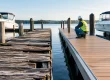
A dock should support the way people actually enjoy or manage the waterfront. A family may need room for swimming, fishing, kayaks, and a boat port. A marina may need efficient slips, durable walkways, and predictable circulation for customers. A park may need a stable launch that helps visitors enter kayaks, canoes, or adaptive equipment with greater confidence.
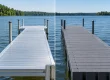
This is where modular design has a clear advantage. Sections can be arranged into straight walkways, L-shapes, T-configurations, platforms, slips, and connected access areas. As needs change, many systems can be expanded or reconfigured rather than completely replaced.
Look for reviews that discuss whether the dock has adapted over time. A homeowner who added a personal watercraft port later, a camp that created a safer kayak launch, or a marina that extended its walkway has more to say about long-term value than someone reviewing a dock the week it arrived.
Accessories Can Change the Daily Experience
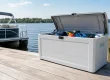
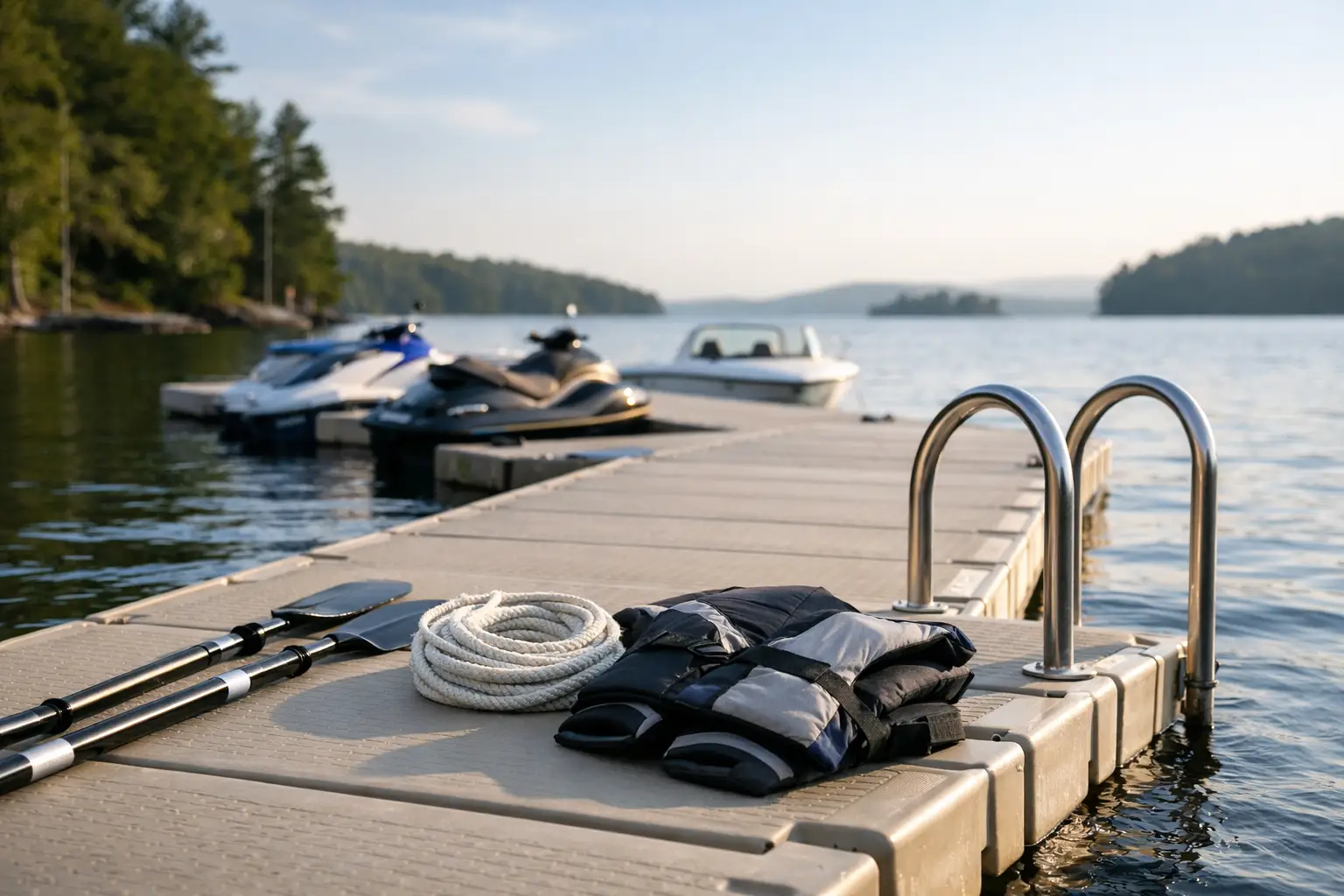
Accessories are not always optional details. A ladder can make swimming access safer. Railings can improve confidence along a gangway or public walkway. Lighting can support early-morning fishing and evening use. Dock boxes help keep life jackets, lines, and gear from cluttering the deck.
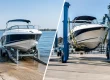
Boat ports and personal watercraft ports can also reduce the effort of launching and storing watercraft while helping protect them from prolonged water exposure. In a useful review, these additions should be discussed in terms of daily function, not simply appearance.
How to Read Negative Floating Dock Reviews Fairly
Negative feedback deserves attention, but it also needs context. A complaint about movement may result from a dock that was undersized for its use, an anchoring system that did not match the site, or conditions that changed after installation. A complaint about service may point to an issue with a third-party installer rather than the dock product itself.
Read for patterns. Repeated comments about difficult access, weak connections, poor communication, or unresolved installation issues should prompt direct questions before purchase. On the other hand, an isolated complaint may reflect a unique site condition or a mismatch between expectations and the chosen configuration.
The most credible reviews usually acknowledge trade-offs. Modular docks can offer flexibility, cleanability, and low maintenance, but they still require thoughtful planning. A larger platform costs more than a narrow walkway. A more capable anchoring plan may add to the initial project cost. Professional installation can be a wise investment when the site is complex, water levels fluctuate, or safe public access is a priority.
A Better Way to Compare Dock Options
Before relying on star ratings alone, compare proposals based on the complete solution. Make sure each option addresses the layout, intended use, water conditions, anchoring, access from shore, delivery, installation, and future expansion. If one quote includes only dock sections while another includes design, anchoring, gangway planning, and installation, the lower number may not represent the lower long-term cost.
EZ Dock Texas has served waterfront owners and organizations since 2000, helping turn those site-specific questions into practical dock layouts. That planning matters because a dock should fit the shoreline, the water, and the people who will depend on it.
The right dock review should leave you with more than confidence in a product. It should help you ask better questions about your own waterfront, so the dock you choose remains a dependable part of it long after the newness wears off.