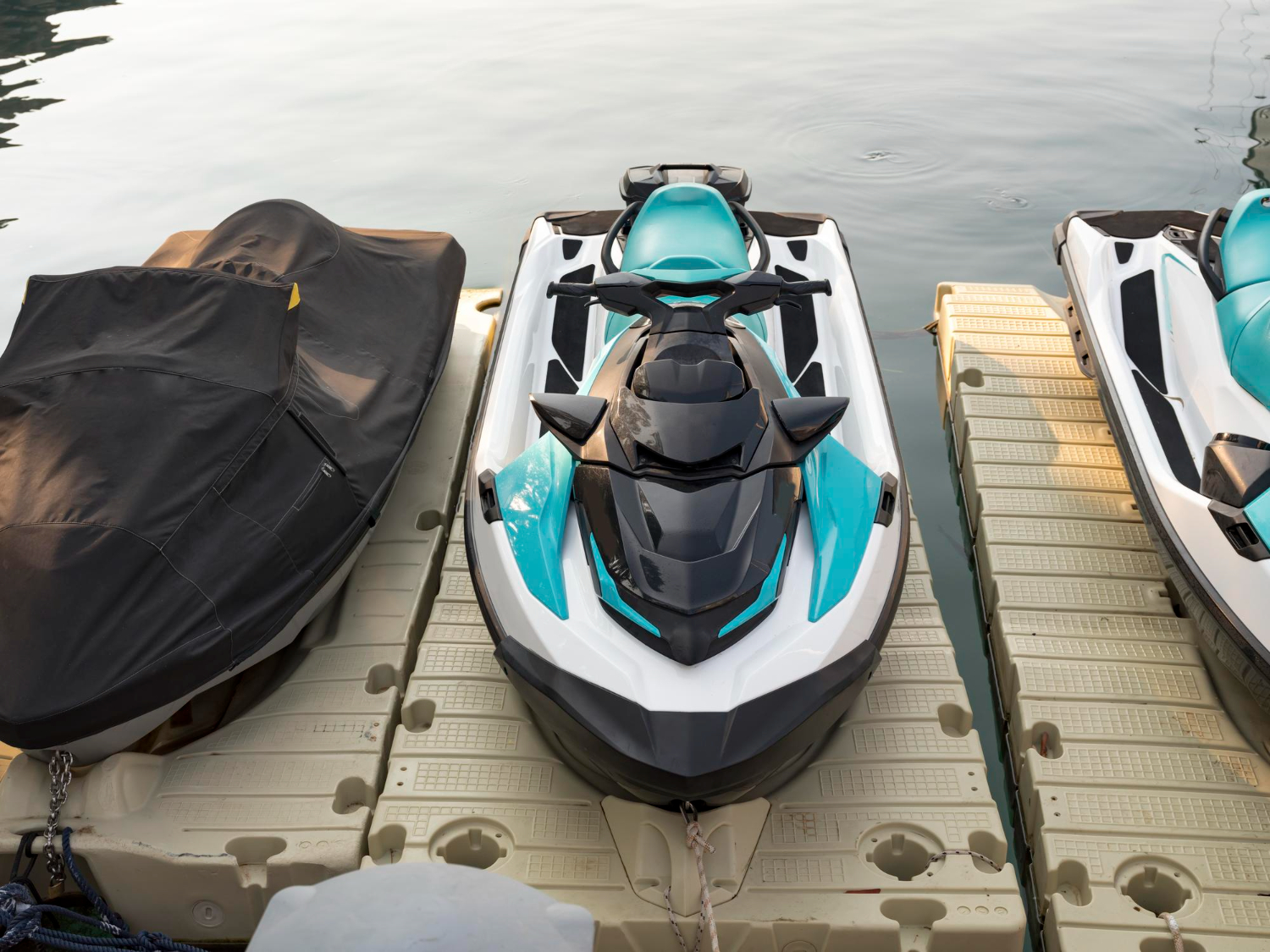
Protecting personal watercraft (PWC) from hull fouling and mechanical wear in coastal zones requires a dynamic, out-of-water storage solution. Selecting the best drive-on jet ski ports for tidal and coastal saltwater environments means choosing heavy-duty, self-leveling floating platforms that rise and fall seamlessly with the daily tide. These engineered platforms feature entry rollers and a contoured hull cradle, allowing users to easily idle up and slide their watercraft completely out of the corrosive saltwater. By utilizing modular, saltwater-impermeable polyethylene construction, property managers can eliminate the electrical failures, rust, and slow operation common with traditional mechanical lifts, ensuring long-term asset longevity and a smooth experience for guests.
The Physics of the Waterfront: Managing Site Conditions
Tidal bays, coastal inlets, and gulf coast waterfronts present an aggressive mix of environmental challenges, including major tidal fluctuations, fast currents, heavy boat wakes, and intense saltwater corrosion. Traditional fixed boat lifts use electric motors, cables, and underwater steel cradles that are highly vulnerable to these conditions. Saltwater quickly corrodes metal gears and snaps lift cables, while barnacles and marine growth jam underwater moving parts, leading to frequent mechanical failures.
Furthermore, during extreme low tides, fixed lifts may lack the depth to drop watercraft back into the water safely. A premium floating PWC port completely avoids these issues by riding the water surface directly. The port maintains a consistent relationship with the watercraft at any tide stage, using the boat’s own power to smoothly launch or dock, while keeping all critical storage surfaces completely out of the marine environment.
Primary Risk and Operational Challenges
Galvanic Corrosion and Mechanical Breakdown
Constant exposure to salt spray and submersion breaks down standard metals and electrical components. For private marinas and coastal estates, this leads to frequent winch, motor, and cable repairs, raising operational costs and creating unexpected downtime.
Hull Osmosis and Marine Bio-Fouling
Leaving a jet ski submerged in saltwater for even a few days allows algae, barnacles, and tube worms to anchor onto the hull. This fouling ruins fuel economy, slows top speeds, and can cause osmotic blistering in the gelcoat, damaging the value of your watercraft fleet.
Tidal Stranding and Grounding Damage
If a PWC storage system lacks proper depth adaptability, a fast-falling tide can trap the lift or watercraft against a shallow mud bottom. This grounding can scratch hulls, twist anchor brackets, or completely strand the watercraft during low-water periods.
Engineering and Design Evaluation Criteria
When picking a drive-on storage solution for a high-end coastal development or private estate, choose materials engineered for long-term survival over basic retail options. The port must feature high impact resistance to easily absorb the momentum of docking watercraft and passing debris without cracking or splitting. Estate managers should choose heavy-duty, UV-stabilized linear low-density polyethylene (LLDPE) systems built with a rotationally molded, hollow chamber design. This advanced polymer is completely saltwater-impermeable, meaning it will never rot, rust, or corrode, and it is completely immune to marine boring organisms.
The anchoring system must deliver excellent depth adaptability to handle extreme tidal fluctuations without using rigid underwater grout or permanent, unyielding lakebed brackets. Heavy-duty, flexible slide mounts or internal piling hoops allow the entire PWC port to track vertical water changes smoothly. This modular scalability lets property managers effortlessly expand their layouts, coupling multiple ports together side-by-side as the estate’s watercraft fleet grows, without needing to replace the core dock setup.
Best Practices for Site Integration and Longevity
A successful coastal installation requires a professional site review to track local current directions, wind patterns, and low-tide depth baselines. Position the drive-on port on the leeward side of your main dock or bulkhead to shield it from direct wave impacts and heavy fetch.
The port should connect to your existing dock using heavy-duty, dual-component flexible hinges or rubber couplers that allow independent pitch and roll. This flexibility prevents wave torque from stressing the anchor points or transfering structural strain back to the main pier. Set up the entry rollers and hull bunks to match the exact weight and hull design of your specific PWC models, ensuring smooth, low-friction docking. For properties facing tropical storms, ensure the attachment hardware uses quick-release connection pins, allowing your crew to quickly unhook and tow the ports to a safe inland boat ramp before a major storm surge hits.
Site Assessment Planning Checklist
- [ ] Absolute Tidal Variance: Measure the exact vertical difference between the highest high tide and lowest low tide at the property.
- [ ] Low Pool Water Depth: Verify there is at least two feet of water at the port entrance during the lowest seasonal low tide to prevent grounding.
- [ ] Current Velocity Mapping: Evaluate tidal current speeds to determine if you need reinforced side-mount anchor brackets.
- [ ] Watercraft Fleet Weights: Catalog the wet weight (including fuel and gear) of all jet skis to adjust port buoyancy correctly.
- [ ] Fastener Material Verification: Confirm all connection bolts, washers, and pins are made of high-grade marine stainless steel.
- [ ] Hull Profile Compatibility: Check that the port’s roller layout matches the specific hull designs of your PWCs (such as deep-V or stepped hulls).
- [ ] Local Environmental Rules: Ensure the layout complies with the Texas General Land Office and the U.S. Army Corps of Engineers.
- [ ] Storm Prep Storage Area: Identify a secure onshore location or boat ramp where ports can be safely stored during severe weather.
Frequently Asked Questions
How does a drive-on port handle the extreme saltwater corrosion that ruins mechanical lifts?
Drive-on ports use high-density polyethylene and composite hardware instead of motors, cables, and submerged steel. Because there are no electrical parts or metals to rust, saltwater corrosion is completely eliminated.
Is it difficult to push a heavy three-passenger jet ski off a drive-on port?
No. Premium ports use strategically placed, low-friction rollers and a contoured hull cradle that matches the watercraft’s weight distribution, allowing users to smoothly roll the PWC into the water by hand.
Will the port remain stable during fast-moving tidal currents?
Yes. When attached with heavy-duty pile guides or flexible dock couplers, the port stays perfectly aligned with your main dock, rising and falling smoothly without drifting or twisting out of line.
Do the rollers require regular lubrication or maintenance?
No. High-quality coastal ports use self-lubricating polymer rollers rotating on composite or stainless steel axles, meaning they stay fully functional without grease or regular maintenance.
Can I connect these jet ski ports directly to an existing wooden fixed dock?
Yes. Using specialized vertical slide tracks or adjustable bracket plates, the floating port can mount directly to your fixed pier joists, giving you a self-leveling lift on a traditional fixed dock.
Modernizing Marine Infrastructure with Professional Consulting Expertise
Upgrading your coastal property with premium drive-on watercraft storage combines top-tier convenience with smart asset protection. Choosing the best drive-on jet ski ports for tidal and coastal saltwater environments keeps your hulls clean, removes mechanical downtime, and ensures your waterfront infrastructure operates flawlessly at any tide stage.
As a premier consulting, engineering, and configuration partner for luxury estates, multi-family developments, and private marinas throughout Texas, EZ Dock Texas provides custom site assessments and heavy-duty floating dock infrastructure built for tough coastal waters. Our experienced team delivers turn-key layouts designed for maximum durability and effortless operation. To see our latest tidal installations and connect with local experts, visit our community page on Facebook.