A waterfront can be beautiful, productive, and well maintained yet still leave people on the shore if the route to the water is too steep, unstable, narrow, or difficult to use. Waterfront accessibility is not a single feature added at the end of a project. It is a design approach that considers how real people move from land to dock, from dock to boat, and back again as water levels and daily needs change.
For a lake home, that may mean making it easier for grandparents, children, and guests to reach a boat or fishing spot with confidence. For a marina, park, campground, or municipal facility, it means accommodating a broad range of visitors while protecting the investment from demanding public use. The right system balances safe movement, durability, maintainability, and the realities of the site.
Waterfront Accessibility Begins at the Shoreline
The most capable floating dock cannot solve an access problem if the path leading to it is poorly planned. A usable waterfront route starts at the parking area, home, trail, or gathering space and continues all the way to the water activity itself.
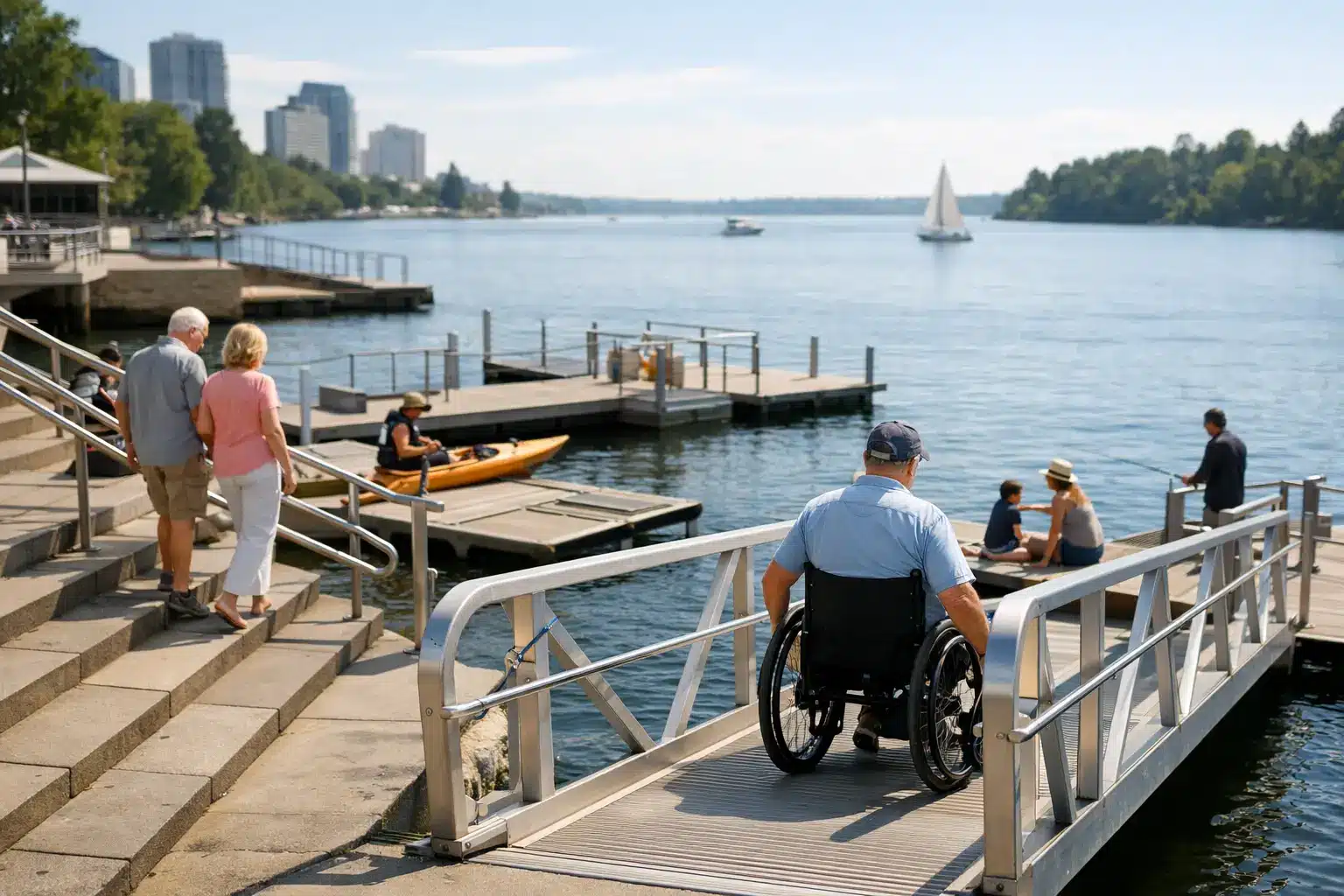
Grade changes are often the first challenge. A fixed walkway can become too steep when lake levels drop, while a ramp that works during a low-water period may sit at an awkward angle when the water rises. A properly selected gangway provides the connection between stable land and a floating dock, but its length, width, surface, handrails, and landing conditions all matter. Longer gangways generally create a more gradual slope, although available shoreline space, water depth, permitting requirements, and anchoring conditions can affect what is practical.
The route should also be predictable underfoot. Uneven transitions, loose surface materials, abrupt lips, and exposed hardware can turn a short walk into a trip hazard. Planning for firm surfaces, clear travel paths, appropriate railings, and well-defined entry points gives every visitor a better experience, not only those with limited mobility.
Why Floating Systems Improve Access on Changing Water
Water levels across Texas, Oklahoma, Arkansas, and New Mexico can change substantially through the year. A fixed pier may be perfectly positioned one season and difficult to reach the next. Floating docks rise and fall with the water, maintaining a more consistent relationship between the deck and a boat, kayak, or personal watercraft.
That consistency can make boarding and disembarking easier, especially where users need a stable platform for fishing, loading supplies, or assisting a family member. It also reduces the need to repeatedly rework a waterfront layout as conditions change. The floating system still needs a sound anchoring plan, because access depends on limiting unwanted movement while allowing the dock to respond naturally to water-level changes.
Anchoring is not a one-size-fits-all decision. Deep water, soft lake bottoms, strong winds, boat traffic, shoreline geometry, and seasonal drawdowns may call for different approaches. Piling, cable, stiff-arm, or other anchoring strategies should be evaluated as part of the complete design rather than treated as an afterthought.
Design for the Activity, Not Just the Dock
A dock that is easy to reach is only the beginning. The deck layout should support what people are actually coming to do. A fishing pier needs room for anglers to pass, cast, and manage gear without crowding the primary path. A public launch area needs a clear, intentional place for paddlers to enter and exit. A marina may need organized routes around slips, utility pedestals, and loading areas.
For paddlesports, a dedicated kayak or canoe launch can reduce the awkward step from a higher dock deck into a low-profile craft. Instead of balancing on the edge of a general-use dock, paddlers can use an entry point designed to stabilize the boat during transfer. This is helpful for beginners, rental guests, school groups, and anyone handling a heavier canoe or gear.
Personal watercraft need their own consideration. A drive-on port can keep a PWC secure and out of the water while creating a repeatable launching routine. The best arrangement leaves adequate clearance for approaching, stepping off, and moving around the craft. Crowding a port into a narrow corner may save a few feet of dock but can make the area less convenient and less safe.
Boat slips should also account for boarding conditions, cleat placement, gates, shore-power access where applicable, and room to move around dock furniture or storage. Accessibility improves when the layout anticipates normal behavior instead of expecting users to navigate around obstacles.
Details That Make a Meaningful Difference
The strongest waterfront designs pay attention to everyday details. A slip-resistant deck surface helps when feet are wet, but drainage and routine cleaning are still necessary. Textured surfaces can collect mud, leaves, and algae in certain environments, so maintenance access should remain part of the plan.
Handrails can provide welcome support along gangways, transitions, elevated walkways, and areas used by children or older adults. Their placement should improve security without blocking circulation, fishing access, or boat boarding. Gates, when appropriate, can help control access around public facilities, private communities, and areas where children may be present.
Lighting is another practical consideration. Low-level, carefully placed lighting can define the path to the dock and improve visibility for early-morning fishing trips or evening returns. The goal is useful illumination, not glare reflecting off the water. Storage boxes, hose locations, power connections, ladders, and life-safety equipment should be positioned so they remain easy to reach without becoming barriers in the main travel path.
For facilities open to the public, design teams should also consider applicable accessibility requirements, local codes, permitting conditions, and operational policies early in the process. Requirements can vary by site and use. A knowledgeable dock partner can coordinate with the owner’s design, engineering, and compliance professionals to help create a practical solution that supports the project’s obligations.
Plan for More Than the Opening Day
Waterfront use changes. A family may start with a simple swimming dock and later add a boat port, kayak launch, or fishing area. A campground may add rental boats. A park may expand programming, host events, or need better access for maintenance and emergency personnel. Modular dock systems are valuable because sections, accessories, and configurations can often be adapted without replacing the entire waterfront structure.
That flexibility should not be confused with a reason to underplan. It is more cost-effective to reserve space for likely additions, select an anchoring approach with future loads in mind, and establish clear primary routes from the beginning. Good planning gives an owner choices later without forcing a complete redesign.
Material selection also affects long-term access. Low-maintenance, American-made polyethylene floating dock components resist rot, splintering, and many of the recurring upkeep concerns associated with wood. Durable connection systems and quality installation help the deck remain stable and serviceable through changing seasons. Even the best materials benefit from inspections, especially after storms, high winds, major water-level changes, or heavy public use.
A Better Access Plan Starts With Real Site Conditions
There is no universal layout for waterfront accessibility. A quiet ranch pond, a high-traffic public boat launch, and a resort marina have different users, budgets, shorelines, and risk considerations. The most effective design begins with questions: Who will use the waterfront? What activities need to happen there? How far do water levels move? Where will people arrive, park, carry equipment, and wait? What needs to remain usable five or ten years from now?
EZ Dock Texas helps owners and public agencies translate those answers into modular floating dock systems built around the site rather than a standard package. From gangways and boardwalks to accessible fishing areas, kayak launches, boat ports, railings, and lighting, each component should support a safer, more useful route to the water.
A well-planned waterfront does more than get people onto a dock. It gives them the confidence to use the water more often, with fewer obstacles between the shoreline and the experience they came for.