A waterfront is rarely static. Lake levels rise after rain, fall during dry seasons, and shift with reservoir operations. That makes the choice between a floating dock versus fixed pier more than a matter of appearance. It affects how safely people step aboard, how much maintenance the structure requires, and whether it will continue serving your property years from now.
For a lake home, marina, public park, ranch pond, or commercial waterfront, the right answer depends on the site. A fixed pier can be a sound solution in stable, shallow water. A modular floating dock is often the more adaptable choice where water levels fluctuate, uses may change, or long-term flexibility matters.
Floating Dock Versus Fixed Pier: The Real Difference
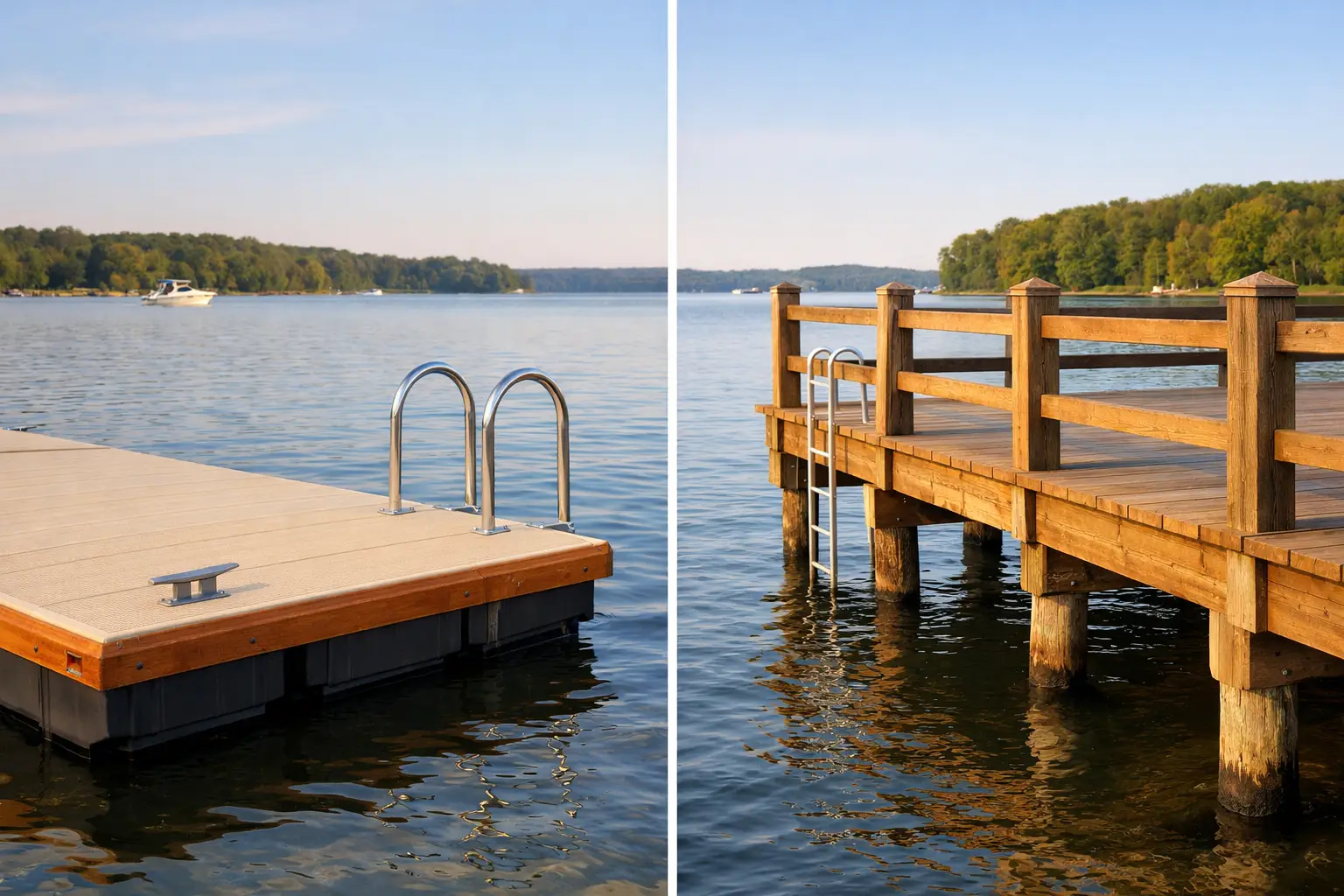
A fixed pier is supported by posts, pilings, or structural framing that remains at a set elevation above the lakebed. The deck does not move with the water. In the right setting, this creates a familiar, solid walking surface and a direct connection from shore to the water.
A floating dock sits on buoyant sections and rises or falls with the water. It is secured with a shoreline connection and an anchoring system designed for the site, such as pipe brackets, cable anchoring, stiff arms, or other engineered methods. The walking surface stays close to the waterline, even when conditions change.
That difference matters most at the point of use. On a fixed pier, the vertical distance from deck to boat can become inconvenient or unsafe when the water level drops. On a floating dock, the dock and boat generally move together. Boarding, launching a kayak, or stepping onto a personal watercraft remains more consistent across changing conditions.
Start With the Water, Not the Dock Style
The first question is not, “Which dock looks better?” It is, “What does this water do throughout the year?”
Many Texas, Oklahoma, Arkansas, and New Mexico reservoirs experience meaningful water-level variation. A fixed pier that works beautifully at one elevation may leave a long climb down to the boat at another. In severe low-water periods, it may stand well above the shoreline or no longer reach usable water at all. A floating system can follow those changes, provided the gangway, anchors, and access point are designed for the anticipated range.
Water depth also matters. A fixed pier can be practical in consistently shallow water with a stable bottom, particularly when the structure is primarily used for fishing, viewing, or shore access. Deeper water, steeply sloped lakebeds, soft bottoms, and dramatic seasonal changes often make fixed construction more complicated and expensive.
Wave action, wind exposure, boat traffic, and flood conditions deserve equal attention. Floating docks need appropriate anchoring and connection details to remain stable. Fixed piers need structural support capable of resisting movement, uplift, and long-term exposure. Neither option should be selected without considering the forces acting on the site.
Why Floating Docks Work for Changing Waterfronts
A floating dock is especially well suited to recreational and operational access. Because it stays near the water surface, it can make boating, swimming, fishing, paddlesports, and personal watercraft use easier for people of different ages and mobility levels.
More consistent boat access
As water rises or falls, a floating dock maintains a relatively consistent step into a boat. This is valuable for homeowners who want less hassle on a weekend at the lake, but it is equally useful for marinas, rental operators, camps, and public facilities serving many visitors. Less distance between the dock and vessel can mean easier loading, steadier boarding, and fewer awkward transfers.
Built for changing needs
Modular floating dock systems can be configured around the way a property is used now and adjusted later. A simple swim platform can become a larger boat dock. A marina layout can add slips, finger piers, launch areas, railings, lighting, or PWC ports. A public waterfront can incorporate accessible routes, kayak launches, fishing areas, or floating boardwalk sections.
This flexibility is one reason floating docks can offer strong long-term value. The system is not necessarily locked into the original footprint. When a family buys a new boat, a campground expands its rental fleet, or a park needs a better launch area, modular components can help the waterfront evolve without starting from scratch.
Low-maintenance materials matter
Not every floating dock is the same. Durable, American-made modular systems are designed to resist rot, splintering, and the routine maintenance associated with traditional wood structures. A quality dock still needs inspections, cleaning, and occasional hardware checks, but owners can spend less time sanding boards and replacing deteriorated decking.
For properties that see heavy use, low maintenance is not simply a convenience. It helps keep the waterfront presentable, reduces downtime, and supports a more predictable ownership cost.
When a Fixed Pier Is the Better Fit
A fixed pier is not outdated or automatically inferior. It can be a sensible choice where water levels are dependable, the site has a favorable bottom, and the main goal is a permanent elevated walkway rather than close-to-water vessel access.
For example, a short fishing pier along a stable pond edge may benefit from a fixed structure. It can provide a firm, familiar platform with railings, benches, and lighting. A fixed pier may also suit locations where a floating structure is impractical due to unusual shoreline conditions, limited anchoring options, or specific permitting requirements.
The trade-off is that fixed construction is less forgiving. If lake levels change significantly, the elevation that once felt ideal may no longer work well. Repairs can also be more involved when posts, pilings, or framing are affected by water movement, shifting soils, or storm damage.
A common solution is not strictly one or the other. Some waterfronts use a fixed walkway from shore combined with a floating dock at the water. This approach can create a stable shore connection while preserving the water-level adaptability that boats and recreational users need.
Access and Anchoring Can Change the Answer
The dock itself is only part of the project. The connection from shore and the anchoring method often determine whether the final system feels safe and dependable.
A gangway must be long enough to accommodate changing water elevations without becoming too steep. This is particularly important for public access, parks, marinas, and facilities that need to serve children, older adults, anglers, paddlers, or visitors using mobility equipment. Railings, non-slip surfaces, transition plates, and properly placed ladders can all improve safety.
Anchoring should match the shoreline, water depth, bottom conditions, expected water movement, and size of the dock layout. A small residential swim platform may need a very different approach than a commercial dock, a fishing pier, or a multi-slip marina. Trying to apply one anchoring method to every waterfront can create instability, excessive movement, or avoidable wear.
For public and commercial projects, accessibility, load requirements, permitting, and operational needs should be addressed early. A dock used by a handful of family members has different design demands than one used by campers, event attendees, emergency responders, or the public every day.
Think Beyond the First Season
The lowest upfront price does not always represent the best waterfront investment. A fixed pier may appear straightforward initially, but future water-level changes, repairs, and lack of adaptability can affect its value. A floating dock may require careful design and anchoring at the outset, yet it can continue to serve the property as water conditions and recreational needs change.
Before committing, consider who will use the waterfront, what vessels need access, the annual water-level range, and how the property may change over the next decade. EZ Dock Texas helps property owners and facilities teams evaluate those details from layout and anchoring through installation.
The best dock is the one that makes access feel dependable on an ordinary day and still works when the shoreline, water level, or way you use the property changes. A thoughtful site assessment now can prevent a waterfront solution from becoming a limitation later.